Exploring Artist Diversity
About the Art
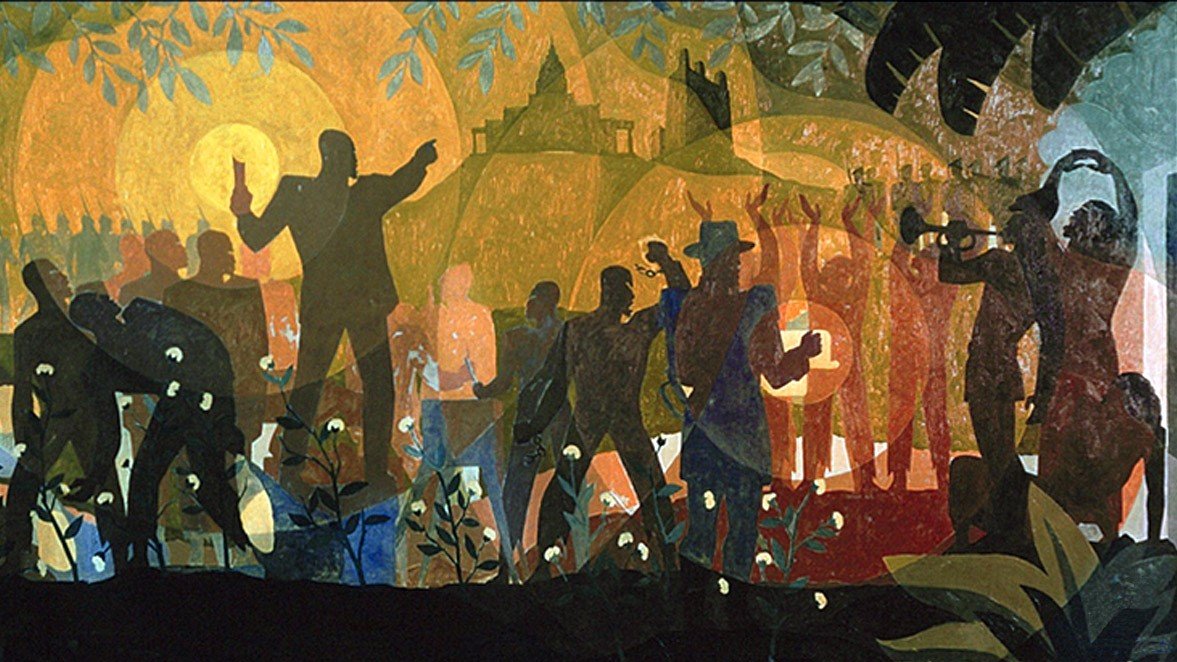
This is called “From Slavery to Reconstruction” by Aaron Douglas. The piece is an oil painting finished in 1934 and can be categorized as Art Deco and Synthetic Cubism.
Introduction
Our Research Questions
To what extent do the demographic characteristics of artists in major U.S. art museums reflect broader socio-cultural shifts in gender, ethnicity, and regional origins, and how does this impact the overall perception of the evolution of art in the United States over time?
Do the political and social movements in the 20th century have an effect on the diversity of the art displayed at various museums and whose voices are amplified?
How so?
Background
Context
The lack of diversity within fine arts museums has long been an issue in America. Museums are filled with works of art primarily by white men, while representations of other demographics and cultures are few and far between. Art is influenced by the life and experiences of the artist, and can be used as a resource to understanding a certain time period. As such, the lack of representation from any other historical perspective in art museums effectively silences those who were not the dominant power throughout history.
About the Art
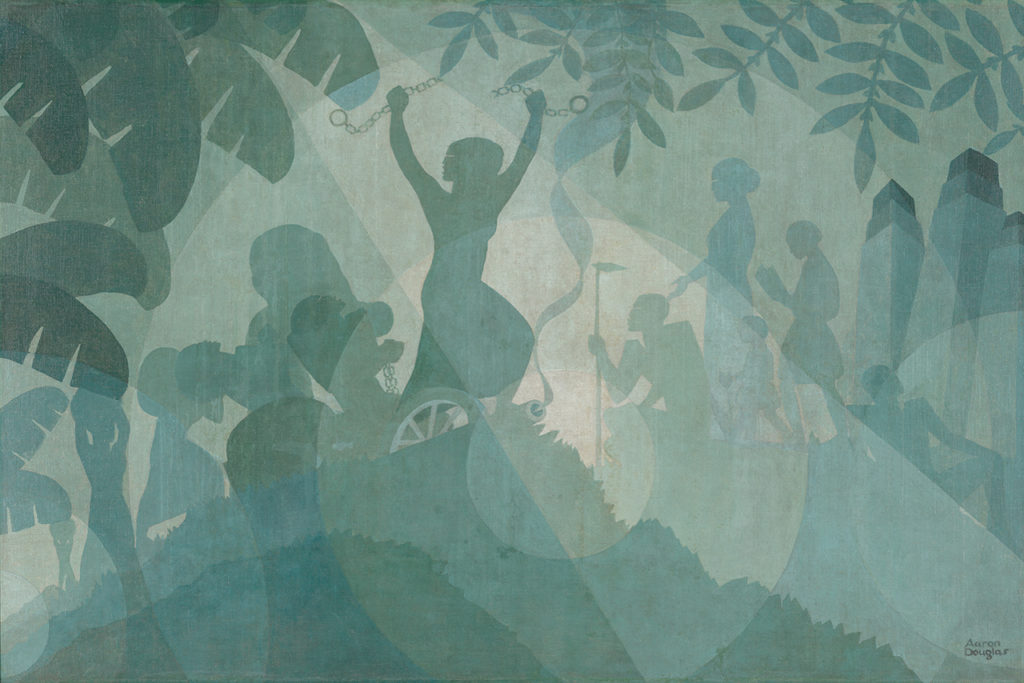
This was work is called “Harriet Tubman” by Aaron Douglas. It was done in 1931 using oil paints.
Place in Literature
These explorations will be analyzed and interpreted through data visualizations looking at 18 fine arts institutions across the country. Central to our investigation is a comprehensive dataset sourced from a study published in PLoS ONE, conducted by Chad M. Topaz and a team of researchers. This study employs a crowdsourcing approach to collect demographic information about thousands of individual, identifiable artists in major U.S. museums. Our dataset sheds light on the relationship between museum collection missions and artist diversity. The transparency of our data sources and the rigorous validation processes ensure the reliability and relevance of our exploration into the multifaceted dynamics of art, culture, and representation in the United States.
About the Art
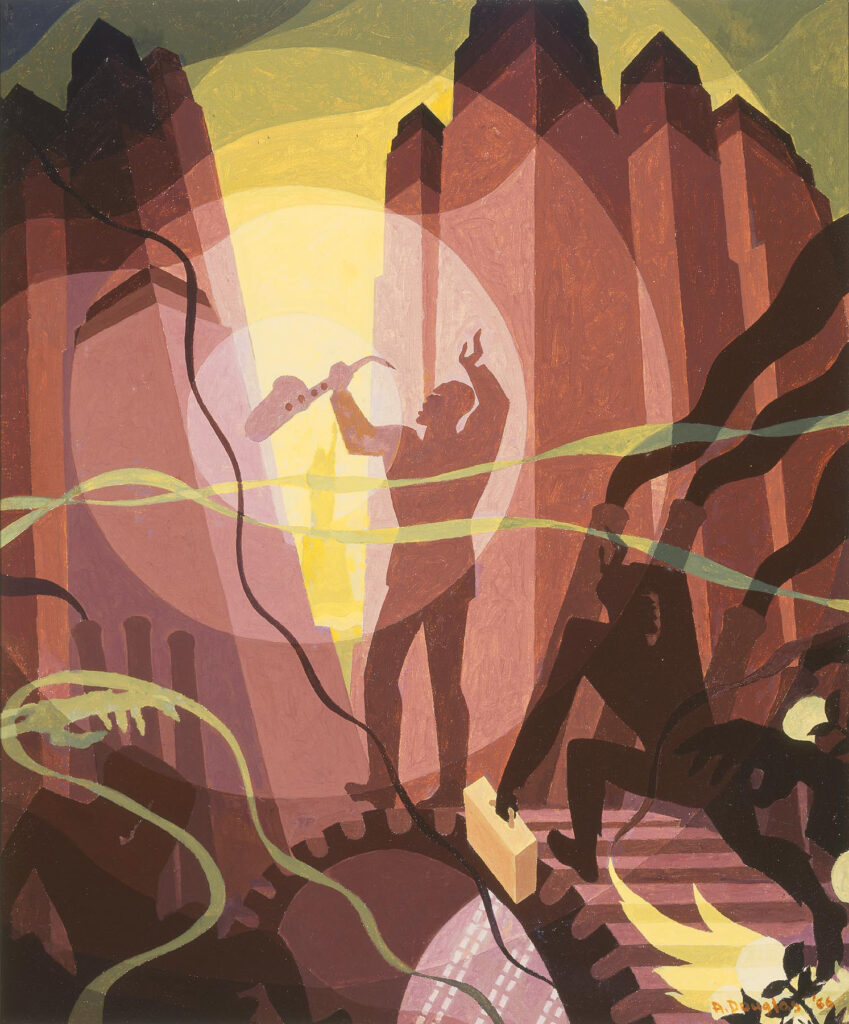
This work is called “Song of the Towers” by Aaron Douglas and painted on canvas using oil paint in 1934.
Significance
In the context of ongoing efforts to improve diversity across American cultural institutions, expansive research has been conducted regarding the levels of diversity within modern American society, and in particular within the art scene. With regard to diversity within this context, there are two dominating topics in terms of the existing literature. There is extensive documentation on the difficulties of increasing diversity as well as the consequent lack of progress thus far. The other main theme surrounds art and its role in socio-political change, including the ways in which it reflects the changing American demographic and the ways in which this change is or is not reflected in museums.
About the Art
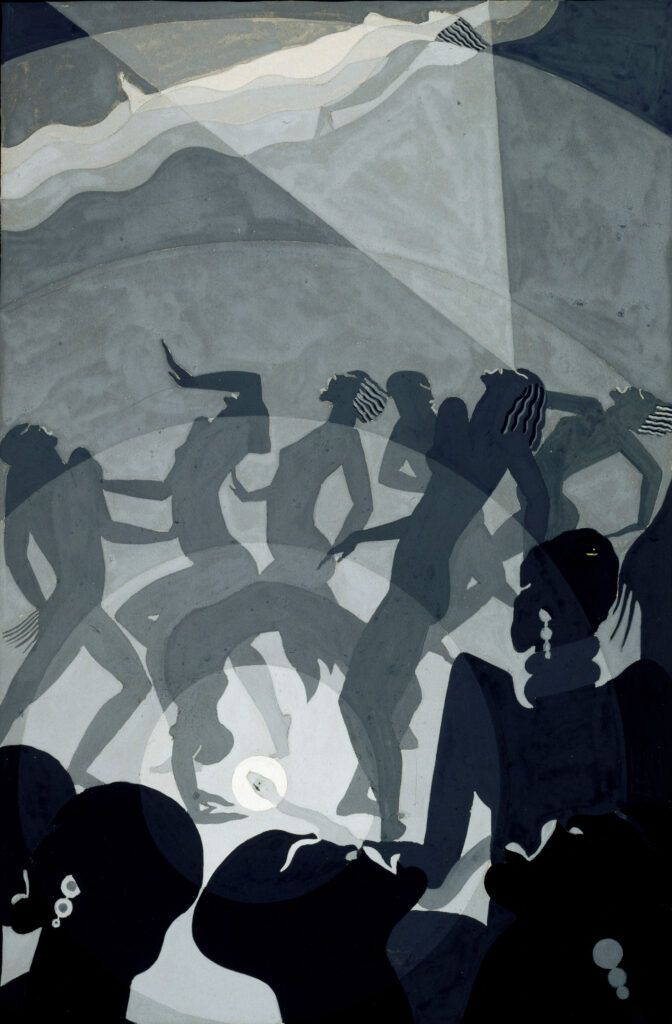
This painting by Aaron Douglas is called “Congo.” It was finished in 1928 using gouache and pencil.
Research Goal
Our project aims to look specifically at the civil rights movement in the 20th century, where nonwhite Americans demanded equal rights and respect as their white counterparts. We want to analyze how museums change over this time period, to see the broader effects and implications of the movements. The data set lacks the specific times when art was added to each museum, but we plan to look at what artists fall within a certain time period to extrapolate information about the diversity of museums following the civil rights. We are working on this dataset because we want to find how artist diversity depicted in museums and historical movements contributed to people’s perception of U.S. art and history, so we can help others understand that the works being shown may only show segments and not the whole story due to lack of representation or historical context.
About the Art
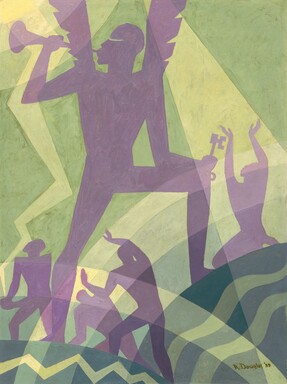
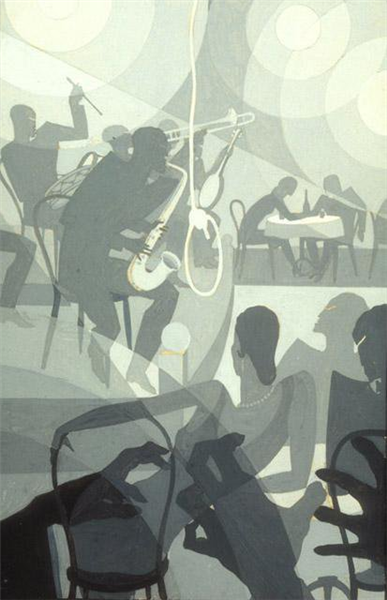
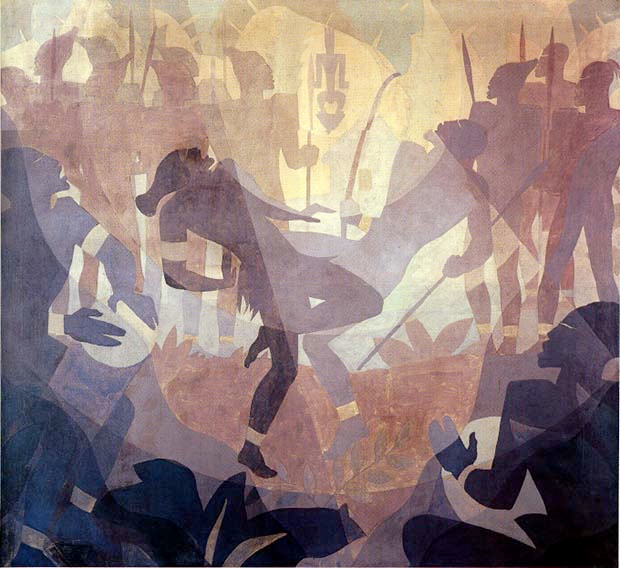
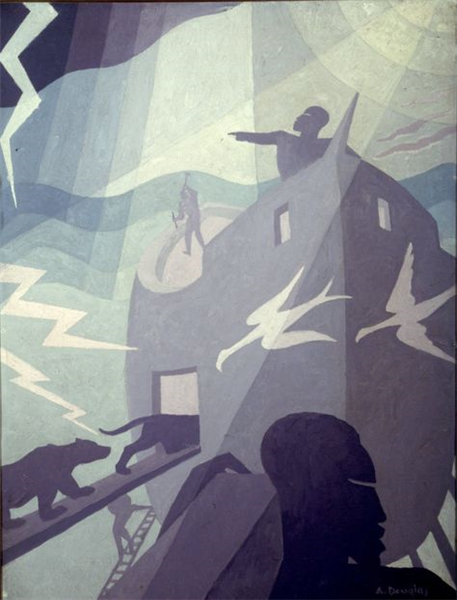
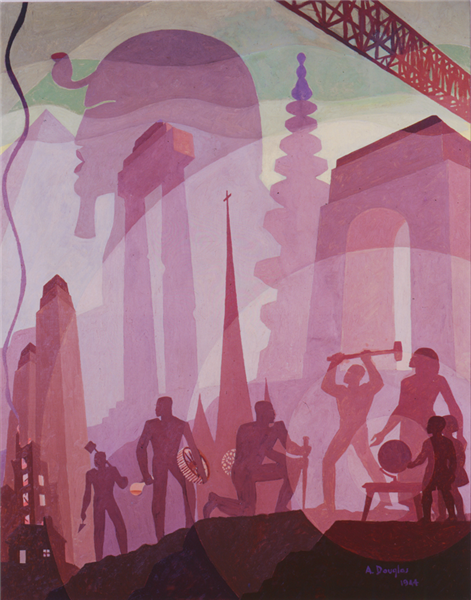
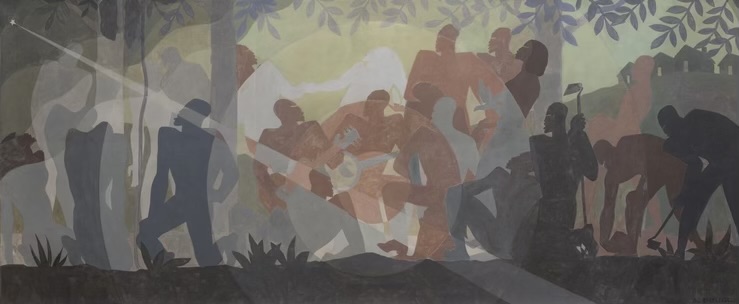
From to left to right these Aaron Douglas works are:
- “Into Bondage” was painted in 1936 using oil paints
- “The Judgement Day” was painted in 1939 using oil paints
- “Charleston” was painted in 1928 using gouache
- “The Negro in African Setting” was painted 1934 using gouache
- “Noah’s Ark” was painted in 1927 using oil paint
- “Building more Stately Mansions” was painted in 1944 using oil paints
- “An Idyll of the Deep South” was painted in 1934 using oil paints

Questions?
Feel free to reach out
Acknowledgments
We express our gratitude to Professor Wendy Perla Kurtz for her invaluable guidance and feedback, which significantly contributed to the development of this final project.
Dr. Kurtz, thank you for imparting essential knowledge on data cleaning, mapping tools, and methodologies. We highly value your dedication to teaching about critical thinking and inclusive design, and we have benefited greatly from your teachings.
We extend our appreciation to our TA Nick Schwieterman for dedicating his time to provide us with thoughtful, constructive, and beneficial feedback for each and every stage of the class.
Your guidance consistently challenged us to engage in critical thinking regarding the significance and consequences of our choices, playing a pivotal role in shaping the outcome of this final project.
